It's a cooperative game in which you each take on the role of samurai defending a village from raiders. Each turn you can Fight, Support or Pass. If you chose to Fight you draw a raider from the deck and then choose whether to attack or defend. Each raider has a numerical value which goes towards filling your battle track. Go beyond the last number on your battle track and you're out of the round and a barricade burns down, meaning the raiders are closer to taking the village. Defending doesn't fill your battle track, but options for defending are limited so making the right decision at the right time is crucial. Each samurai has a unique ability that they can use and also - by Supporting - have other samurai use. It's quite a simplistic overview of the game (there's much more to it than what I've explained) but there are pros and cons to every choice you can make, and your samurai will have to be in complete harmony if you are going to have any chance of saving the village.

I have limited experience with co-op games. I own several - and I love them - but there are loads out there, with all the variety of competitive games. The people I game with tend to be quite competitive, and so cooperative games don't make it to the table that often. One friend whom I often game with won't touch a co-op. If the goal isn't to thrash the other players she's not interested.
I, on the other hand, don't really mind who wins, I just like to have fun (as soon as I wrote that I felt like a massive loser), but I love puzzle solving. I love the race to the goal - especially when it's close - but I don't get disappointed if I don't win.
I love beating the game though. I love working with the other players to figure out the best way to achieve the objective. For me a co-op has to be hard. I've got to go in to it knowing our chances of beating it are slim. I'm slightly masochistic in that sense. As long as I get a sense that it is beatable I will keep coming back for more. There's so much fun and satisfaction in you and your team beating a really challenging game.
I've only had Samurai Spirit for about a week, so maybe it's too early to really know how I feel about it. But I've played a lot of it in that time and it seems to hit that co-op sweet spot for me. I'm not sure how to explain it. Maybe if I just ramble it'll become clear.
 Pandemic (Z-Man Games) is a co-op that has loads going for it. The biggest problem I have with Pandemic is me. I guess it's because I'm usually teaching it (and also because I'm a bit of a control freak), but it can feel like a solo game with 4 people just taking it in turns to move the pieces. It's so easy to play the whole game with one person making all the decisions and just telling the others how to move. Maybe it's because - aside from the individual character abilities - there aren't a lot of individual decisions to be made. Everyone can see at any given moment the next step to take. Sometimes there's a few areas that need equal attention and the players need to figure out where to prioritise, but whenever I'm playing it it's usually the same person making those decisions (hint: it's me!)
It's a hard game, but the more I play it the easier it gets to beat. But then that's why the game has the option to play at a harder difficulty. It's still a fantastic game. I've had some great games where it's been a mad panic to get things under control as the diseases spread at an uncontrollable rate. I love the look of it, the components, the game length; I'm not trying to knock it. I'm just exploring what I love about the co-op experience.
Forbidden Island (Gamewright) is another great game with similar mechanics to Pandemic, but unfortunately suffers the same problem with me playing it.

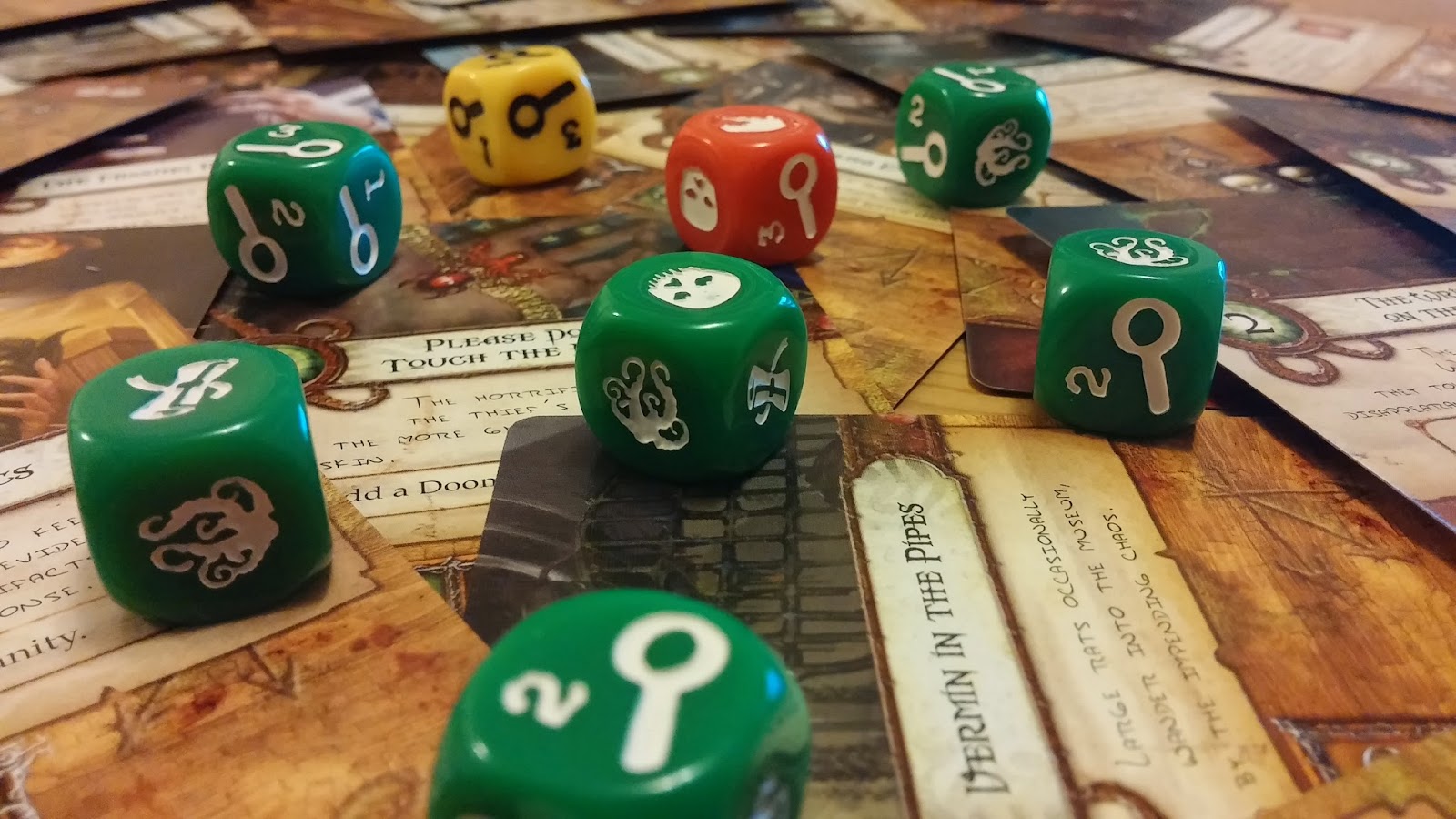
Elder Sign (Fantasy Flight Games) goes the other way. You're working towards the same goal without really working together - if that makes sense. Several turns can go by without input from the other players. Saying that, I like how you can support each other in Elder Sign. If your character is in the same room as the person who's turn it is you have the option to lock in a die for them, at the risk of losing your sanity if it all goes wrong.
Like I said before, Samurai Spirit hits that sweet spot for me. It's (really) tough to beat, but it can be beaten (I've not been bold enough to try the Hard or Heroic set-ups). You have plenty to think about as an individual player but you can support your fellow samurai if and when they need it. And it's finding that balance of when to support and when to fight. When to attack and when to defend. It's a tense and exciting game. When that last farmstead burns down and the village has succumb to the bad guys, it feels like it was my fault for the decisions I made. It makes me want to go again straight away and do better!
So there you go; not necessarily that Samurai Spirit is better than the other games mentioned, just that it balances all my needs for a co-op game so neatly. I also love playing it solo. I've tried a few 3-player set-ups on my own where I'm controlling each samurai and I still found it great fun.
There's still plenty of cooperative games out there that I want to play: Flash Point, Mice and Mystics, Mysterium, Forbidden Desert, Robinson Crusoe... and I'm interested in hearing about your experiences with co-op games. Do you enjoy them? Do you have a favourite? Have you played any from my wishlist? If so, leave a comment or tweet me.